

Last Updated: July 13, 2022 by Flora Gibbins
Many aquarists research for hours on end about the correct water temperature, pH, ammonia, and nitrate levels for keeping a goldfish. But, they forget another crucial aspect: goldfish water.
Yes, most, if not all.
[FREE DOWNLOAD]: How To Avoid The Top 5 Mistakes New Betta Owners Make
Goldfish are a hardy species that can survive in different conditions. However, if they are put in the wrong water, these fish will die in minutes or hours.
So, what is the best water for goldfish? This article outlines whether you should keep goldfish in tap, bottled, distilled, or well water.
Read on.
Contents
Can Goldfish Live In Tap Water?
Yes. You can add tap water into a goldfish tank but under one condition. You should treat the water with a water conditioner.
Tap water is safe for human consumption, but it does not make the safest environment for your goldfish. Here are reasons why tap water is harmful to goldfish.
Tap Water Contains Chlorine And Chloramine
Public water treatment systems add chlorine and chloramine to tap water to prevent waterborne bacteria. Chlorine dissipates quickly, but chloramine stays longer in the solution since it is a combination of chlorine and ammonia.
Chlorination prevents humans from contracting waterborne illnesses such as cholera, typhoid, Hepatitis A, E-Coli, and dysentery. But as effective as these chemicals are in preventing waterborne diseases, they are destructive to your goldfish.
Goldfish absorb oxygen from their tank water.
If the water contains traces of chlorine and chloramine, these chemicals will burn your fish’s lungs and create breathing difficulties. Once the damage is done, the effects are irreversible, eventually killing your fish.
Chlorine Removes Beneficial Bacteria
Chlorine in tap water also removes the good bacteria that fish need to live healthily. Beneficial bacteria break down fish waste and dead plant matter to prevent the buildup of ammonia and nitrites. This is why you cycle a new tank before adding fish.
Using untreated tap water will destroy the healthy bacteria colonies in the tank that you worked so hard to nurture.
Tap Water Contains Heavy Metals
In addition to chlorinating chemicals, tap water contains heavy metals like lead, copper, cadmium, zinc, and mercury. These metals may not be problematic to humans as they are to goldfish.
Some heavy metals are okay for goldfish in small amounts.
Take zinc, for example. It promotes growth, promotes cellular functions, and protects against free radicals. However, if fish consume too much zinc, they risk damaging their gills, which is fatal.
Lead and copper also weaken your fish’s immunity and can be life-threatening.
How To Treat Tap Water For Goldfish
Untreated tap water can kill your goldfish in a few minutes or hours. But, you can make tap water safe by doing the following:
Add A Water Conditioner
A water conditioner removes chlorine and other heavy metals from the tap water. Water conditioners help goldfish lead a long and healthy life since they neutralize chemicals that would stress or damage your fish’s internal organs.
[FREE DOWNLOAD]: How To Avoid The Top 5 Mistakes New Betta Owners Make
Some water conditioners only remove chlorine, while others condition the goldfish tank’s water and feature power boosters that fight infections.
When choosing a water conditioner, choose one that neutralizes chlorine and chloramine. If you use a chlorine water conditioner, you will only neutralize chlorine and not the toxic ammonia. This can prove dangerous for your goldfish.
Some of the best water conditioners for treating tap water are:
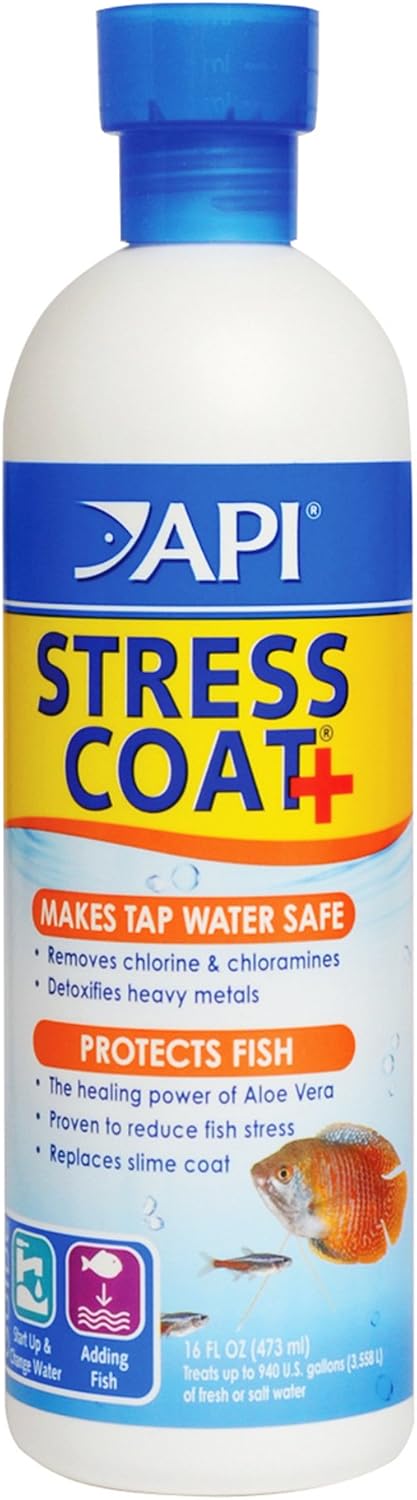
API Stress Coat
I use API Stress Coat to perform water changes and can attest that it is a great water conditioner. It neutralizes harmful chemicals and detoxifies heavy metals. What’s more, it features Aloe Vera to heal a fish’s damaged slime coat and reduce stress. The API Stress coat does improve a goldfish’s immune system.
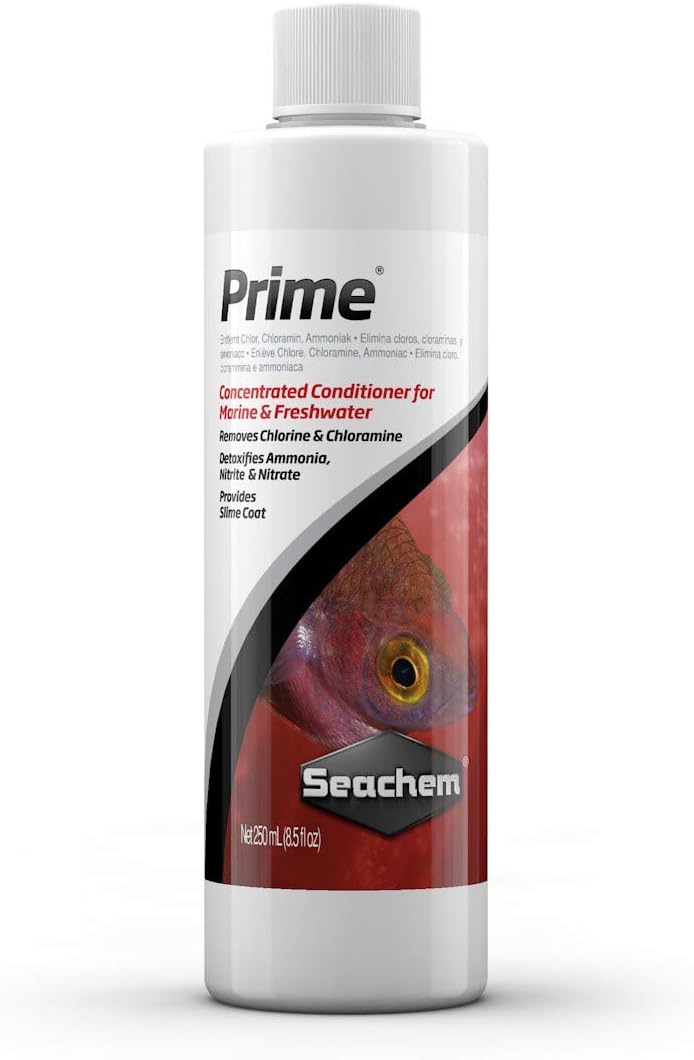
Seachem Prime
This water conditioner removes chlorine and chloramine, neutralizes nitrites and nitrates, and converts toxic ammonia into a safe substance. Seachem Prime also promotes the development of a healthier slime coat by detoxifying heavy metals.
- Tetra AquaSafe Plus
This conditioner removes heavy metals, chlorine, and chloramine to make tap water safe for your fish. Tetra AquaSafe Plus also speeds up healing by rebuilding a fish’s slime coat.

All products have directions on how to use them. Always follow these directions carefully to keep your goldfish safe.
Fun Fact: Goldfish are not choosy when it comes to aquatic water. However, an aquarium environment is different from the wild and temperature is one issue to contend with. Read our post, “Goldfish Temperature: How Hot Or Cold Is Needed By Your Pet?” to learn more.
Watch This!
Here is a YouTube video about a cheaper way to neutralize chlorine:
Use Reverse Osmosis
You can also treat tap water through reverse osmosis. This purification process involves pushing aquarium water through a semipermeable membrane to remove particles and contaminants.
Reverse osmosis removes chlorine, chloramine, heavy metals, and essential minerals from the tap water. Should you choose to use this method, add a re-mineralizing buffer to add nourishing minerals to the tank water.
Leave Water Out
Alternatively, you can wait for the chlorine and chloramine to dissolve on their own, which can take 24 to 28 hours. This method is inexpensive but time-consuming, especially for those with larger aquariums.
Can Goldfish Live In Distilled Water?
Distilled water has no traces of chlorine and heavy metals, making it safe water for goldfish. Distilled water undergoes distillation to remove minerals and other impurities.
However, it is also free of essential minerals for your goldfish. So, it would be best to add a re-mineralizing buffer to make it healthy for your fish. Distilled water works best when refilling evaporated water in a fish tank.
Can Goldfish Live In Bottled Water?
Yes, they can, but you should treat it. Bottled water can have traces of chlorine which can hurt your fish. Therefore, use a water conditioner to treat it before you add it to the tank water.
Can Goldfish Live In Pre-Conditioned Water?
Absolutely. You can buy pre-conditioned water from your local pet store. The greatest advantage of using this water for goldfish is you can add it directly to the tank water without treating it. However, ensure it has a similar temperature to the water in the tank to avoid stressing your fish.
Pre-conditioned water is oxygenated and contains essential minerals for fish. The only downside is it is expensive for aquarists with large aquariums.
[FREE DOWNLOAD]: How To Avoid The Top 5 Mistakes New Betta Owners Make
Can Goldfish Live In Well Water?
Yes, but it is not the best water for fish keeping. Water may harbor harmful chemicals, metals, or bacteria that are invisible to the human eye. It would be best if you do not use well water rather than risk your goldfish life.
How To Perform Routine Water Changes In A Goldfish Tank
Most goldfish owners are unaware that performing water changes can change water parameters in a fish tank. Here is how to perform a water change to avoid making these mistakes.
Step 1: Turn off the filter, air pump, or other tank equipment.
Step 2: Use a siphon to vacuum the tank and gravel waste. One end of the vacuum should be at the bottom of the tank and the other inside a bucket.
Step 3: Move the vacuum around the tank so you can clean all parts of the gravel. Stop vacuuming after you remove one-third of the aquarium water.
Step 4: Remove the filter. Place it in the bucket you added the old water from the tank. Do not put the filter in untreated tap water as it will kill good bacteria.
Step 5: Reinstall the filter after cleaning.
Step 6: Wash gravel and tank decorations in treated tap water.
Step 7: Refill the vacuumed water with clean water. Add tap water into a bucket and treat it with a conditioner.
Step 8: Slowly pour the treated tap water into the aquarium. You do not want to change the water conditions and temperature in the tank. Use a test kit to confirm the goldfish tank has the correct water parameters.
During water change, never wash the aquarium equipment in tap water. This includes the substrate, filter, and filter sponges. Beneficial bacteria inhabit these spaces and will die if you use untreated tap water for cleaning.
We also recommend changing goldfish water once a week. Perform at least a 20-25% water change to remove waste and reduce spikes in ammonia and nitrites.
Conclusion
So what is the best water for goldfish? It is one without chlorine, chloramine, and heavy metals. Goldfish should not live in tap water unless it is treated. Treating tap water could mean a long and healthier life for your goldfish.
Treat tap water before adding it to the aquarium whether you own smaller fancy goldfish or larger goldfish. Alternatively, buy pre-conditioned water for your small tank size.


